Corporate event production in Dubai is the technical side of an event: the stage and set, sound, lighting, LED screens, video playback and the show caller who runs every cue on the day. Event management decides what happens and when. Production makes sure it actually happens, on time, with every speaker heard and every video playing on cue.
This guide explains what each part of production covers, how staging, AV and show calling fit together, and what to ask a production partner before you sign. It is written for marketing, HR and events teams planning conferences, launches, gala dinners and award nights in Dubai and across the UAE.
What does corporate event production include?
Production covers everything the audience sees and hears, plus the systems and people that keep it running. On a typical corporate event it includes:
- Staging and set: the stage platform, steps, set pieces, lecterns and branded backdrops.
- Audio: speakers, microphones for every presenter and panel, the mixing desk and the engineer who runs it.
- Lighting: stage wash so faces read well on camera, plus mood and effect lighting for walk-ins, reveals and award moments.
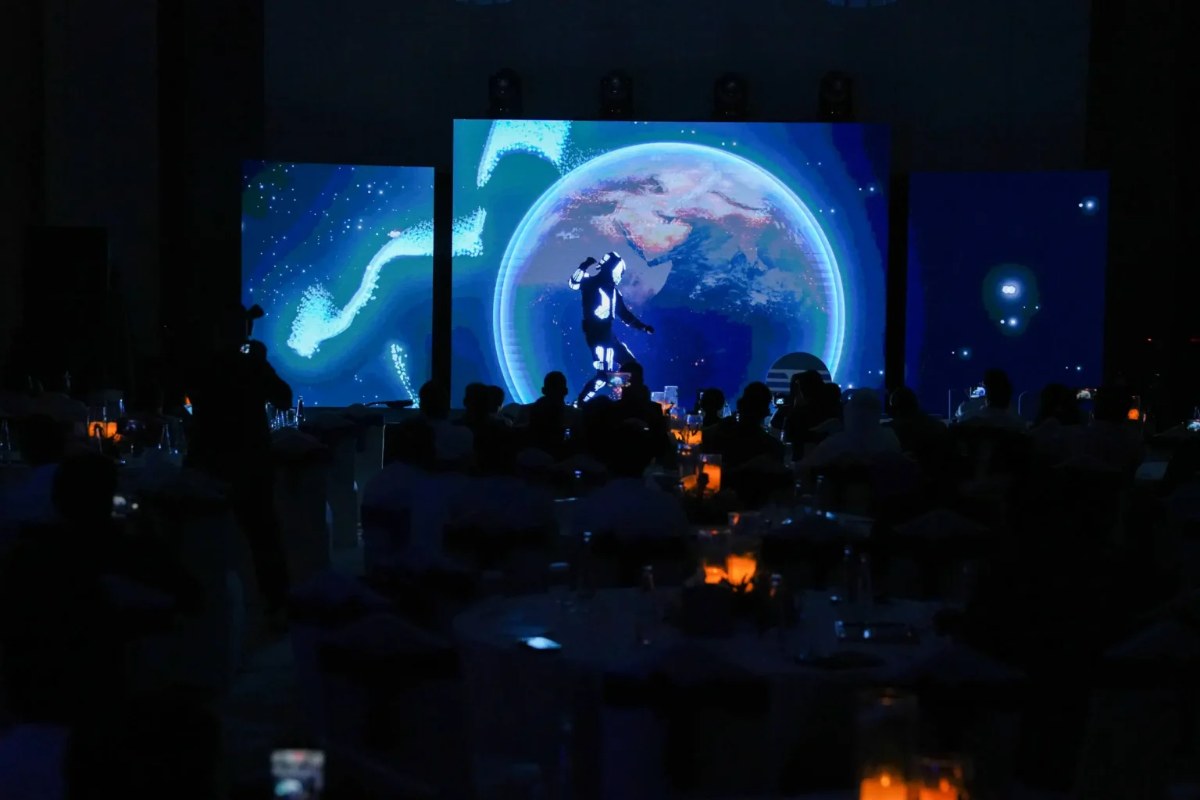
- Video and LED: LED walls or projection, confidence monitors for speakers, and IMAG (live camera feed on screen) for larger rooms.
- Content and playback: presentations, videos, stings and walk-on graphics, all checked, labelled and loaded into the playback system.
- Rigging and power: trusses, hanging points and power distribution, planned against what the venue allows.
- Show calling and stage management: the run of show, the cue sheet and the crew who call and execute every cue.
- Recording and streaming: multi-camera recording, and live streaming for hybrid audiences when needed.
What is the difference between event management and event production?
The two overlap, which is why many companies hire one partner for both. The split below is how the work usually divides.
| Area | Event management | Event production |
|---|---|---|
| Main question | What is the event, who is it for and what should it achieve? | How will the room look, sound and run on the day? |
| Covers | Brief, budget, venue, guest list, catering, suppliers, timeline | Stage, AV, lighting, LED, content playback, rigging, show calling |
| Key documents | Event brief, budget, supplier plan | Stage plan, technical rider, run of show, cue sheet |
| On the day | Guest flow, hosting, VIPs, catering service | Every cue, every microphone, every screen, every change-over |
| Risk if done badly | The wrong event for the audience | The right event that falls apart in front of it |
For a full view of what a brief should cover before production starts, see our guide to what a full-service corporate event brief covers.
How is a stage designed for a corporate event?
Good stage design starts from the content, not the décor. Before anything is drawn, the production team needs the agenda, the number of presenters, any panels or award walks, and whether the event is filmed. Then the design works through a few practical questions:
- Sightlines: can every seat see the presenter and the screen? Stage height and screen position change with room size and seating style.
- Screen format: one wide LED wall, a centre screen with side screens, or projection. The choice depends on ceiling height, ambient light and how much video the programme uses.
- Presenter positions: lectern, panel seating and where award winners enter and exit, so nobody crosses in front of the screen.
- Confidence monitors: screens facing the stage so speakers can see their slides and notes without turning round.
- Branding: where the logo and event name sit so they appear in every photo and camera shot.
- Venue limits: load-in times, ceiling rigging points, floor loading and power. Dubai hotel ballrooms and halls each have their own technical rules, so these are checked on the site visit, not assumed.
What AV does a conference, launch or gala actually need?
AV should be sized to the room and the programme. The table below shows how needs typically shift by event type. Exact kit is always set after the site visit.
| Event type | Audio | Video and LED | Lighting | Watch out for |
|---|---|---|---|---|
| Conference or summit | Lectern and handheld mics, panel mics, audience mics for Q&A | Main LED or projection, confidence monitors, IMAG in larger halls | Even stage wash for faces and camera | Fast speaker change-overs and last-minute slide updates |
| Product launch | Clear speech plus impact sound for the reveal | LED wall content built for the reveal moment | Effect lighting timed to the reveal | The reveal cue: it has to land the first time |
| Gala dinner or award night | Presenter mics, playback for walk-ups, band or DJ feed | Nominee videos, winner graphics, sponsor loops | Room mood plus winner spotlights | Long programmes and many cues in a row |
| Hybrid event | Clean audio feed for the stream as well as the room | Cameras, vision mixing and stream graphics | Camera-friendly lighting | Internet resilience and a backup stream plan |
For hybrid set-ups, our hybrid event checklist for Dubai covers cameras, streaming, audio and internet in more detail.
What is show calling and why does it matter?
Show calling is how a live event is run second by second. The show caller sits at the production desk with a headset and the cue sheet, and tells each operator exactly when to act: “Standby lights 12, standby video 4… lights go, video go.” Sound, lighting, video, stage management and the presenter all work from the same script.
It matters because a corporate event is full of moments that only work if several things happen together. A walk-on needs the music, the lights and the screen graphic at the same time. An award needs the nominee video, the winner’s name, the spotlight and the presenter in the right place. Without a show caller, each operator guesses, and the audience notices.
Three documents make show calling work:
- Run of show: the minute-by-minute programme, from doors open to close.
- Cue sheet: every technical cue numbered, with who does what at each point.
- Script: the host’s words, marked with where each cue falls.
What happens in the technical rehearsal?
The technical rehearsal is where problems are found while there is still time to fix them. A well-run rehearsal usually includes:
- Line check: every microphone, playback source and screen tested.
- Cue-to-cue: the team jumps from cue to cue through the whole show to test every transition, without running the full speeches.
- Presenter walk-throughs: key speakers practise their entrance, clicker and mic, and see the stage and monitors.
- Content check: every video and slide played from the show machine, not from a laptop or USB handed over on the day.
- Backup plan: spare mics, a backup playback machine and a clear plan for what happens if something fails mid-show.
How far ahead should production planning start?
Larger conferences and galas are easier and calmer when production is planned in stages. A typical sequence looks like this:
| When | What gets fixed |
|---|---|
| As soon as the venue is booked | Site visit, room layout, stage position, power and rigging checks |
| Once the agenda is agreed | Stage design, screen format, AV list, crew plan |
| As content arrives | Videos, slides and graphics checked and loaded |
| Final week | Run of show, cue sheet and script locked |
| Event day | Build, line check, cue-to-cue, presenter walk-throughs, show |
Short timelines can still work with the right team. Avion Events once took an awards ceremony from brief to show in less than three days, covering concept, production, branding, full AV and entertainment. It is possible, but a longer runway gives more room for rehearsal and fewer compromises.
What should you ask an event production company before you hire?
- Will you visit the venue before you quote?
- Who will be the show caller on the day, and have they called a show of this size before?
- Is the AV in-house or subcontracted, and who is responsible if something fails?
- What backup is included for microphones, playback and power?
- When is the technical rehearsal, and how long is it?
- What do you need from us, and by when (content, scripts, speaker list)?
- Can you show a stage plan and a sample cue sheet from a past event?
- Does the event need a permit, and will you handle it? Dubai’s Department of Economy and Tourism publishes guidance on event permits, including for corporate events.
How does Avion Events handle corporate event production?
Avion Events has more than 20 years of experience and brings concept, planning, production, staging, AV, décor, technology and entertainment together under one team. A few recent examples:
- Etisalat rebranding conference: a conference for 700 attendees introducing a refreshed brand, with Avion covering concept, content creation, event branding, full-scale AV production and technical delivery.
- Mentos and CC Everest Summit awards: an Everest-themed conference and awards night that opened with an interactive LED floor at the entrance, followed by product and strategy announcements, awards, dinner and live entertainment.
- Coromandel conference and awards: a multi-day programme for 1,000 guests, ending with a conference, networking lunch and an evening awards ceremony.
See our corporate event management services for the full range, from conferences and launches to gala dinners and award nights.
Frequently asked questions
What is the difference between AV and event production?
AV is the equipment: sound, lighting, screens and playback. Event production is the wider job of designing the stage, choosing and running that equipment, preparing content and calling the show on the day.
What does a show caller do?
A show caller runs the live event from the production desk. Working from the cue sheet, they tell the sound, lighting, video and stage teams exactly when to act, so walk-ons, videos, awards and reveals happen on time.
Do I need a technical rehearsal for a small corporate event?
Yes, even a short one. Testing every microphone, screen and video before guests arrive prevents the most common problems, such as a dead mic or a video that will not play.
Should event management and production be handled by the same company?
It is not required, but one partner for both usually means fewer handovers and one person responsible on the day. If you use separate companies, agree early who owns the run of show.
Related reading
- Banking and fintech conferences in the UAE: security, compliance and guest flow
- National Day corporate events in Dubai: how to plan your 2026 celebration
- Conference management companies in Dubai: what to look for before you hire
- Gala dinner organisers in Dubai: what they handle and how to choose
- Product launch events in Dubai: what it takes to pull one off
- LED walls, holograms or projection mapping: what works best at a UAE exhibition
Plan your next event with Avion Events
Tell us your date, guest numbers, venue (if you have one) and what the event needs to achieve. We will send a tailored concept and a fully itemised proposal within 48 hours, with no obligation. Request a proposal or email info@aviondubai.com.
Sources
- Avion Events project pages: Etisalat rebranding conference, Mentos and CC Everest Summit awards, Coromandel conference and awards, Awards ceremony (checked 11 November 2026)
- Dubai Department of Economy and Tourism, Apply for an event permit (checked 11 November 2026)